The operations console
Configuration is a screen, not a support ticket.
Programs, state routing, consent documents, clinic locations and fulfillment routing are yours to change. None of the below required an engineer, a release, or a support ticket.
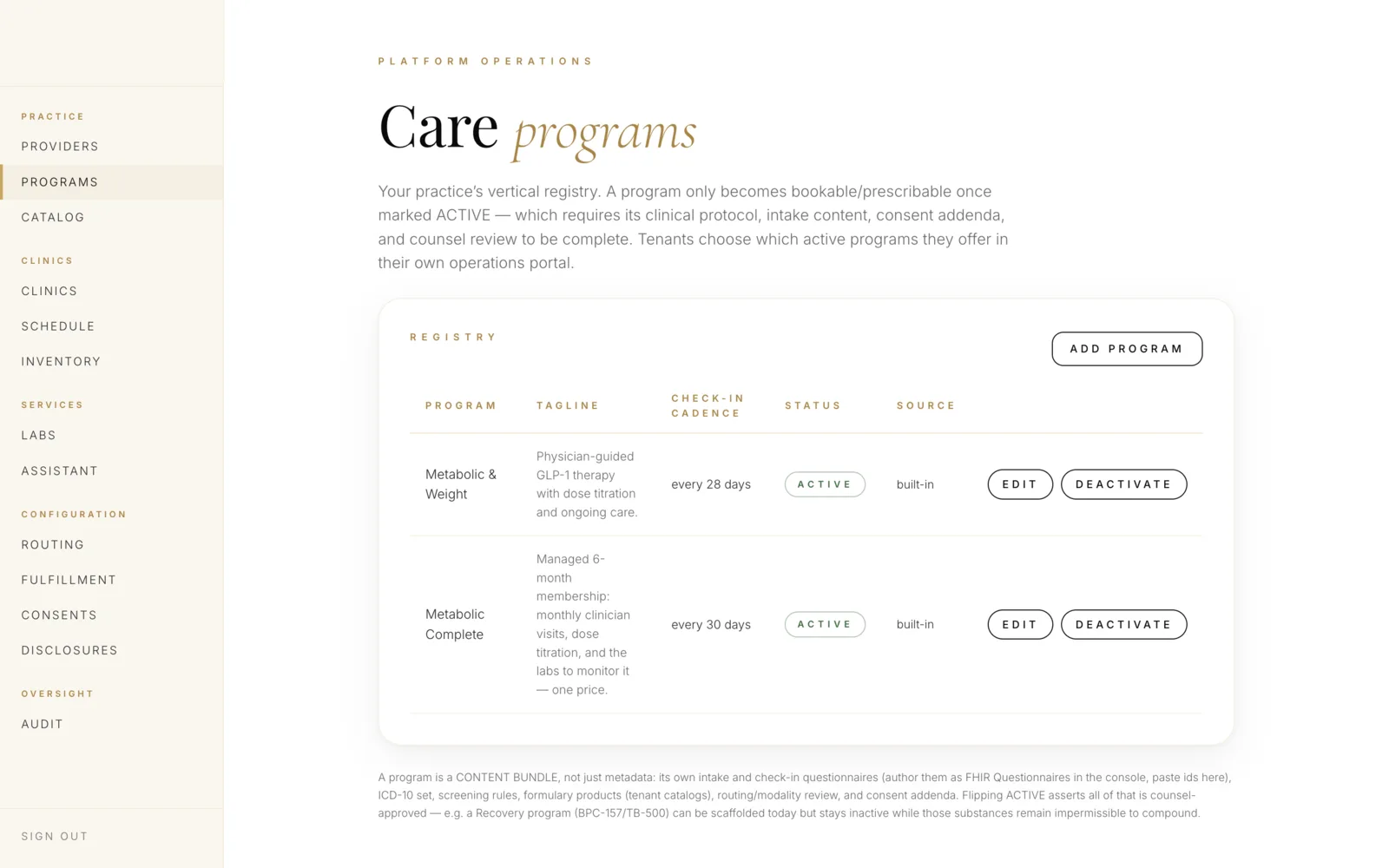
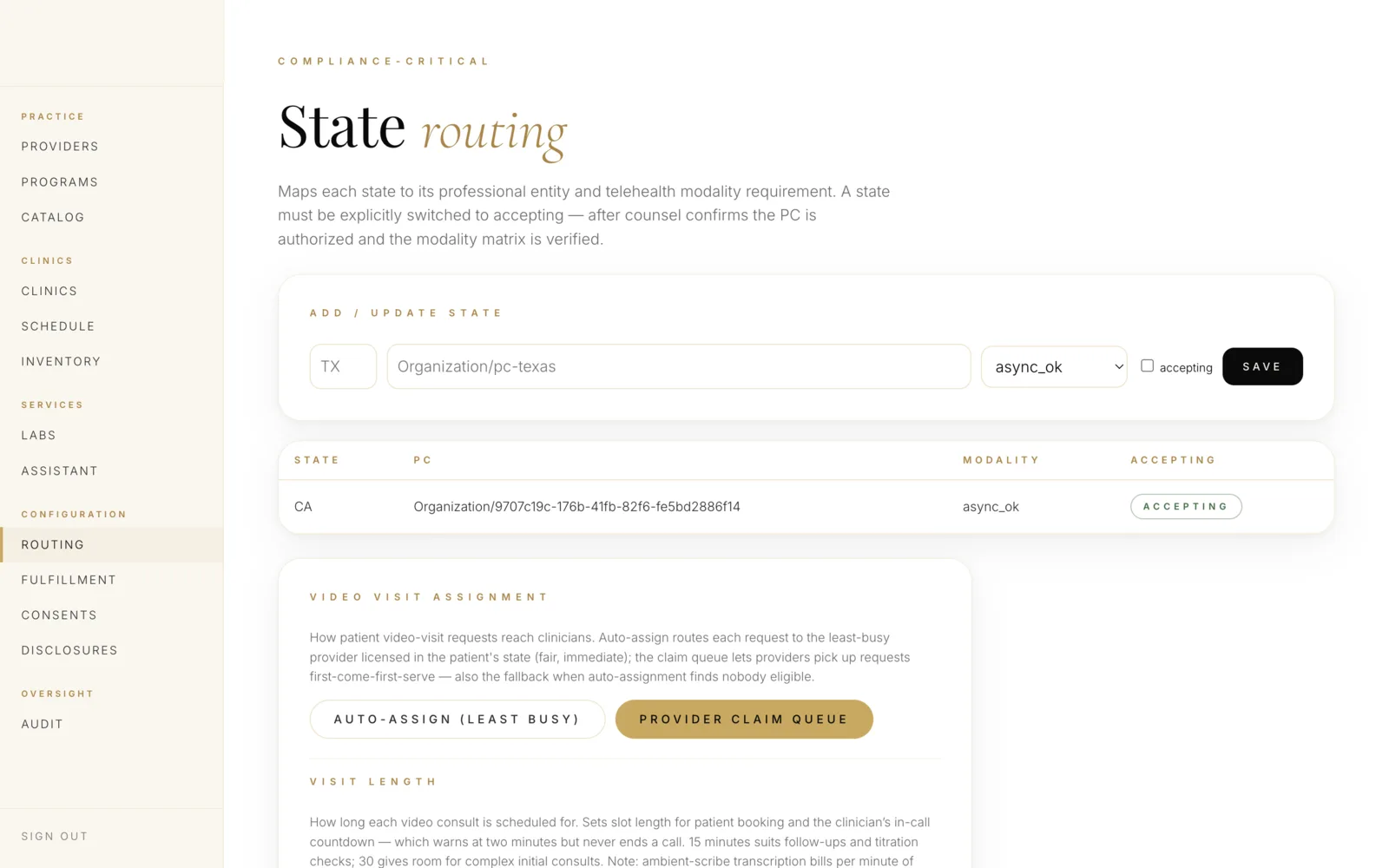
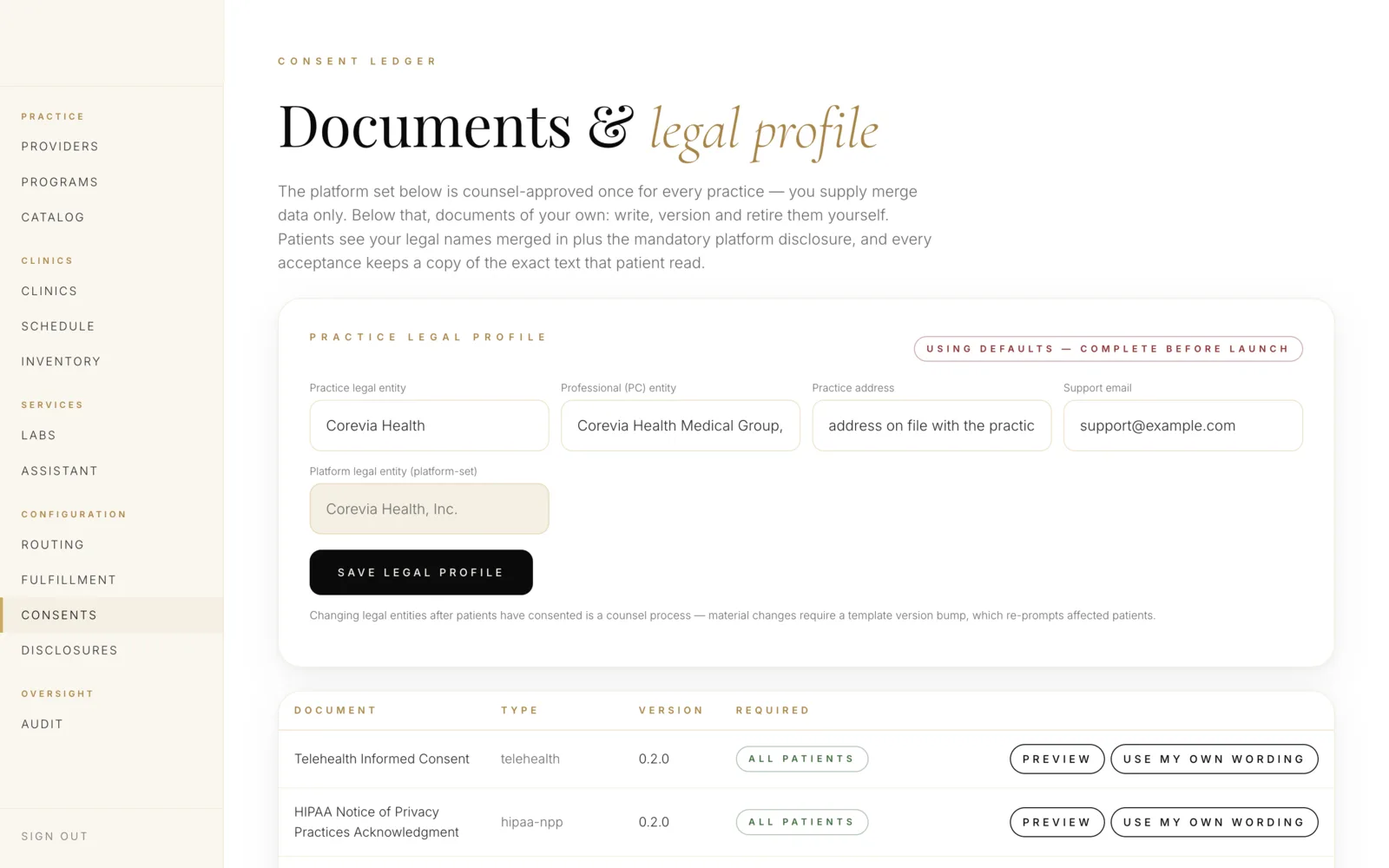
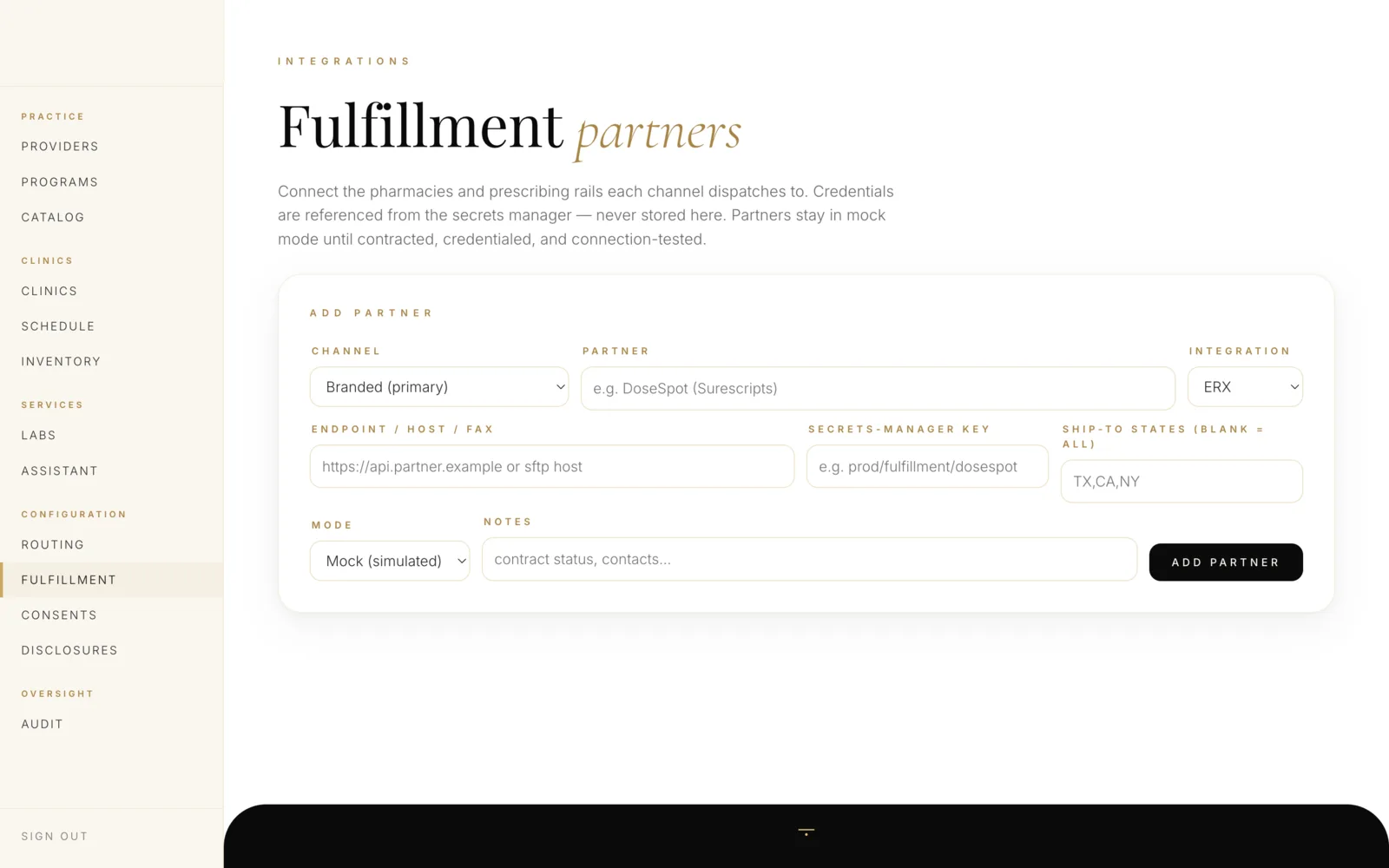
The difference between a platform and an agency is whether you can change your own product on a Tuesday afternoon. Each of these is editable per brand, versioned, and takes effect on the next patient — not the next sprint.
A program bundles everything a therapy needs. Create one, and the storefront, intake, routing and fulfillment reshape around it.
Consents are versioned legal records, not checkboxes. The platform stores what the patient actually agreed to and when.
Build the questionnaire that decides who is eligible — and let it do the screening before a clinician's time is spent.
The follow-up questionnaire that turns a prescription into a monitored program — and catches the patient who is struggling.
Everything above is per brand. Two companies on the same platform can run the same therapy with different protocols, formularies, prices, consents and check-in cadences without either one knowing the other exists.
Most platforms give you a dashboard. This is an operating surface — the things that break a care business, visible before they break it.
Each brand is an isolated clinical project with its own record, policies and configuration. The console lets an operator move between them; the data never does.
Domain, identity, programs, consents and pricing — a new tenant stands up as configuration, with its own isolated clinical record from the first patient.
Practice-only with your own physicians, marketplace on the Corevia network, or hybrid running both together in one practice.
Push the network roster, formulary or a protocol update across the tenants that should receive it — and only those.
Patients, charts, messages and audit trails never cross a brand boundary. Isolation is enforced by access policy at the data layer.
Turn video, AI assistance, compounding or a program on for one brand without touching another.
Give a brand's own operators access to their configuration and roster — scoped so they see their tenant and nothing else.
Giving operators the power to change clinical configuration is only responsible if the platform refuses the changes that would hurt someone.
Editing a consent creates a new version. What a patient agreed to in March remains exactly what they agreed to, and a material change can require re-consent before the next visit.
If a program's verification requirements can't be resolved, the platform demands the deepest check rather than the shallowest. Ambiguity fails safe.
Signed notes, issued prescriptions and completed intakes keep the protocol version in force at the time. The record reflects the care given, not today's configuration.
Who changed the formulary, the price or the eligibility rule — and when — is on the audit trail alongside clinical access.
An operations user administers configuration without gaining clinical access to charts. Being able to edit a program is not permission to read a patient.
Programs, state routing, consent documents, clinic locations and fulfillment routing are yours to change. None of the below required an engineer, a release, or a support ticket.
We'll edit an intake form, version a consent and watch it reach the patient experience while you're still watching the screen.